
Stepping Into the Magic is a OneStep customer story about residents at Harbor Healthcare of Ironton who spent months getting ready for a trip to Walt Disney World. It was produced with PH Consulting, whose elder vacations program made the trip possible. OneStep sponsored this year's trip.
It is also one chapter of a bigger idea. At OneStep, we believe every step tells a story: how someone moves says a lot about where they are today and what could come next. For these residents, the next chapter happened to include a flight to Florida.
The news came around Christmas: a large group of residents from Harbor Healthcare of Ironton would be going to Walt Disney World. From that moment, the trip became something to count down to, and something to work toward, for everyone on the list.
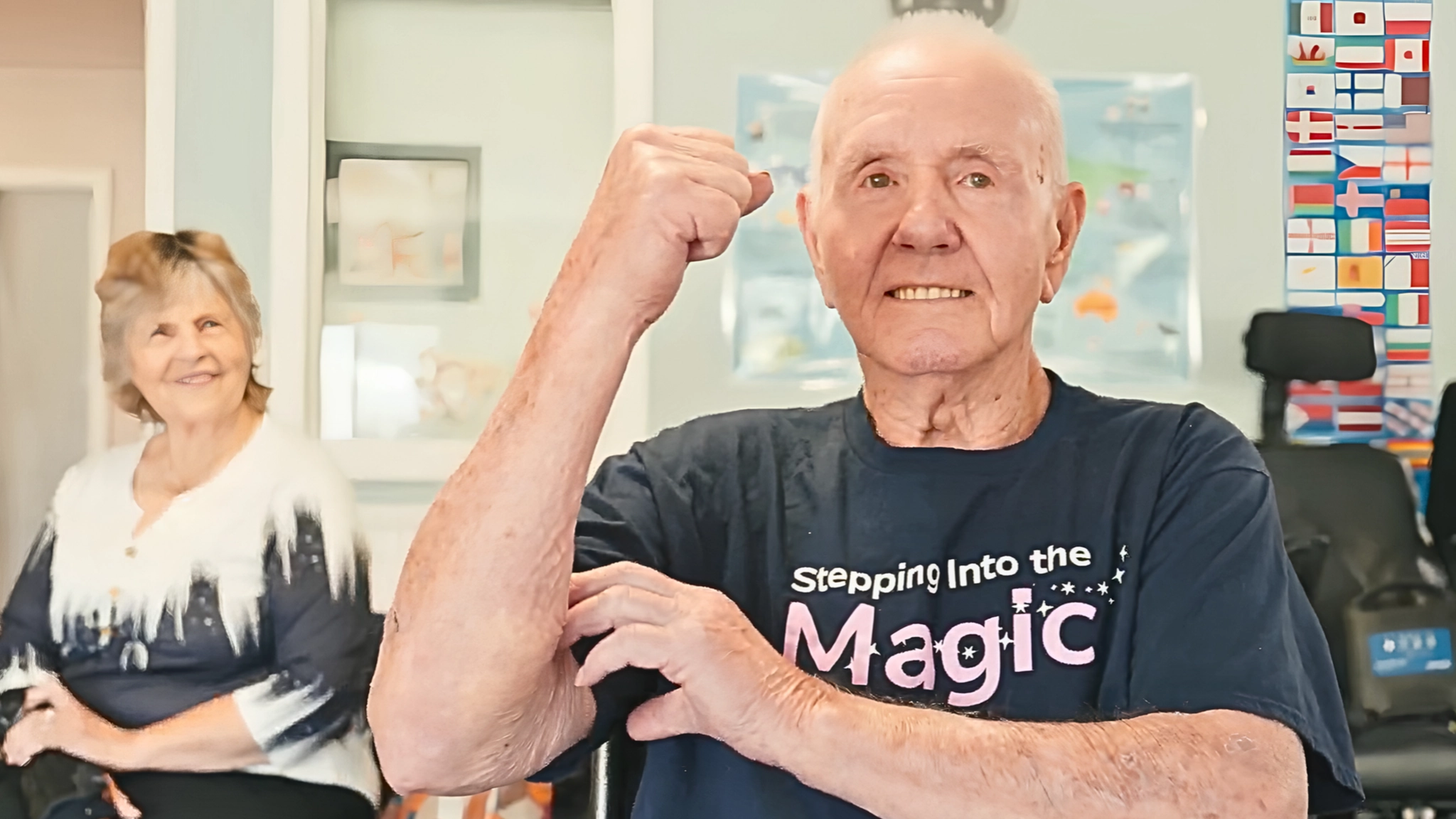
Every resident had a story of their own. For Cletis, almost everything about it would be new. He had never been on an airplane. He had never been to Disney. At a stage of life when many people assume their biggest adventures are behind them, he was about to have a long list of firsts.
His wife, Rita, understood what that meant better than anyone. "He's getting to do something for the first time," she says. "At his age, he deserves that."
Cletis wouldn't be going alone. His friend Larry, a lifelong Disney fan who had already been to both Disney World and Disneyland, was going too. One had never been and one couldn't wait to go back, and they were just two of the many residents making the trip.
Excitement was the easy part. A trip like this would ask a lot of every resident going: airports, long days on their feet, and hours of walking through the parks. Getting them ready would take months of work, and a care team that could see exactly how they were moving.
Daily life in a care community involves more walking than most people realize. Residents move to meals, to therapy, and to activities throughout the day. But that walking comes in short stretches with plenty of rest in between. Disney would be different.
Kim, Harbor's Director of Rehab, put the gap plainly: residents walk "three times a day," while at Disney World "they're gonna be doing it all day long."
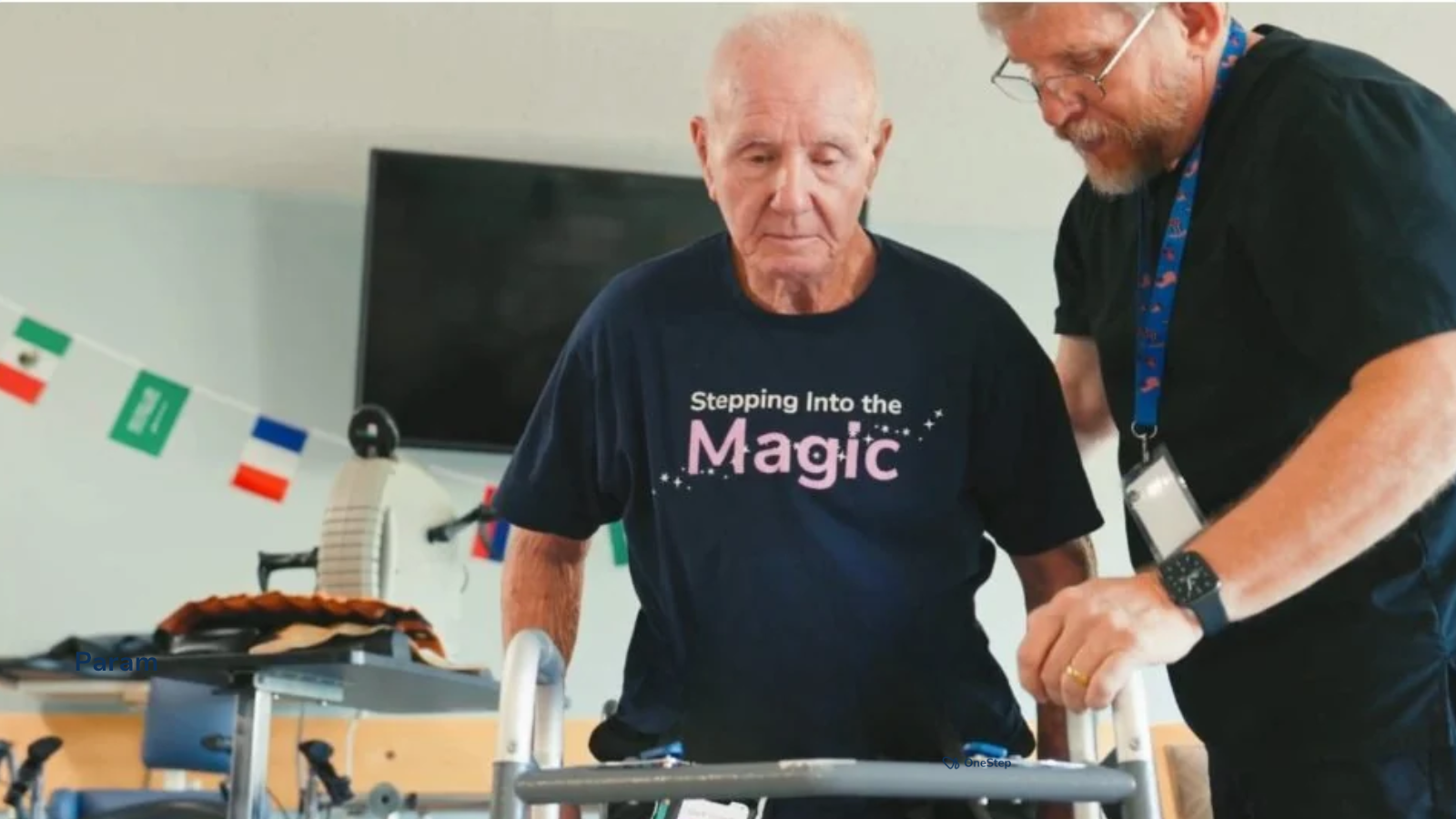
So the therapy team set out to build endurance. They gradually asked more of each resident, walking longer and farther as the weeks went on. To track whether it was working, they used OneStep. A resident would walk with a smartphone in his pocket, and the app would measure how far he went and how fast he moved. Over time, those walks added up to a clear picture of each person's progress, one the whole team could see and plan around.
For the therapists, that visibility served a bigger purpose than the trip itself. The goal, as physical therapist Param describes it, was helping residents reach their goals and stay as independent as possible. Disney just gave everyone a date on the calendar.
Every resident on the trip worked toward goals that fit them, and Cletis's progress shows what that looked like. When he first came to Harbor, he could walk less than 50 feet. By the time the trip drew close, his physical therapist, Noel, reported that he was walking more than 400 feet. His walking speed had climbed from 0.42 to 0.7 meters per second.
Numbers like these matter because they replace guesswork. The team didn't have to wonder whether Cletis was getting stronger. They could see it, walk after walk.
They also knew that progress meant something different for each resident. For Larry, the focus was endurance: building the stamina to keep going through a full day in the parks. For Cletis, it was consistency: showing he could walk the same way, day after day, without good days and bad days swinging too far apart.
That clarity changed how the staff felt about saying yes. Hannah, Harbor's administrator, describes the difference this way: "We're not just going off what we see, but seeing objective data has helped us so much to be able to prepare for this Disney trip."
The residents felt it too. Cletis says that when he takes a break now, he would rather stand up than sit down. And when Larry is asked what made the trip possible, his answer is four words long: "OneStep got me here."

Not every resident will travel, and Disney isn't the goal for everyone. For most people in skilled nursing, progress is quieter. It might be walking to the dining room without stopping, standing long enough to brush their teeth at the sink, or getting around the building with more independence than they had a month ago.
Cheryl, a resident at Madison Park Healthcare, is a good example. When she first moved in, her sister would pull out her phone and take her for walks, just to build the habit. Today, she says she can move around more than before. It's a simple change, and an important one.
What these stories share is visibility. When a care team can see how someone is moving and how that movement changes over time, they can set goals that fit the person in front of them, and recognize progress when it happens.
For skilled nursing facilities, objective movement data does more than guide care. It helps them show the results of that care.
When a hospital discharge planner decides where to send a patient, they want confidence that the facility will help that person regain function. Trends in walking speed and distance give facilities a clear, shareable way to demonstrate recovery, beyond anecdotes. It's the same kind of evidence that gave Harbor's team confidence about Disney, applied to the everyday work of rehab.
Built on 35 billion steps analyzed, OneStep is an FDA-listed movement analysis platform that measures 30+ gait parameters using only a smartphone, with no wearables required. It works through two connected apps. OneStep MOVE is where every story begins: residents walk with a phone in their pocket, turning everyday movement into objective mobility data. OneStep CARE is where that story becomes actionable: care teams see how residents are moving between sessions, not only during therapy, so they can assess mobility, act early, and show results.
This story belongs to the residents, families, and staff at Harbor Healthcare of Ironton and Madison Park Healthcare, and to PH Consulting, whose elder vacations program grew from one person's dream into opportunities for many older adults and the people who care for them.
Thank you for letting us be part of it. Every step tells a story, and we can't wait to see where the next ones lead.
See how OneStep helps care teams measure progress.
Can a smartphone really measure how someone walks? Yes. OneStep uses the sensors already in a smartphone to measure gait parameters such as walking speed, cadence, and step symmetry, with no wearables.
Is this outcome typical? Every resident is different, and results vary. This story shows what one care team accomplished with residents who had a meaningful goal to work toward.
Why does walking speed matter? Walking speed is one of the most widely used measures of mobility in older adults. Tracking it over time helps care teams see whether someone is improving.
How can skilled nursing facilities use movement data with referral partners? Facilities can share objective trends in mobility, such as walking speed and distance, to demonstrate recovery and the outcomes of their rehab programs.