
.png)
Patient engagement is often treated as a reminder problem.
Send another notification. Add another check-in. Ask patients to log another activity.
But getting someone to participate once isn't the hard part. The real challenge is giving them a reason to keep coming back.
Across one real-world deployment of OneStep, 45% of patients who recorded a single walk went on to record 40 or more.
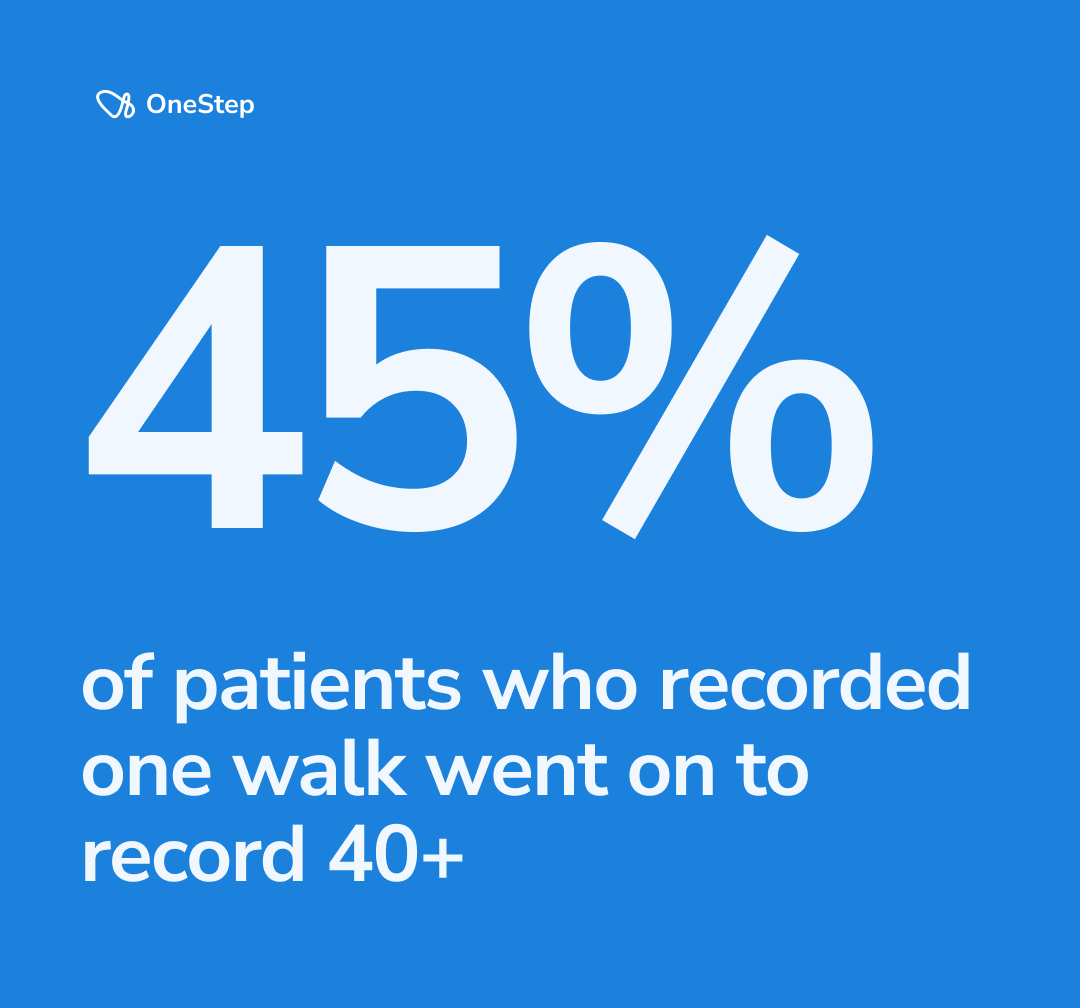
That's more than an initial interaction with a digital health tool. It's repeated participation.
So what makes a patient come back for walk number 40?
Much of digital health asks patients to give something: complete a questionnaire, log an exercise, record this measurement, or check a box.
Each interaction may be clinically valuable, but from the patient's perspective, it can feel like yet another task on their to-do list - something they're doing for their care team rather than for themselves.
Sustained patient engagement requires a different question:
What does the patient get back?
With OneStep, a recorded walk doesn't simply generate mobility data for a clinician. Patients get a Walk Score and immediate feedback about their mobility.
That creates a simple feedback loop:
Walk → see your mobility → get feedback → come back and measure again
Instead of sending information into a black box, patients can engage with something tangible about their own movement, right in the moment.
When you're the person going through recovery every day, small changes can be difficult to recognize.
Am I walking more evenly? Is my stability improving? Is the way I move actually changing?
Objective feedback can help make those changes visible.
And that matters because measurement becomes more meaningful when it helps answer the question patients actually care about:
“Am I getting better?”
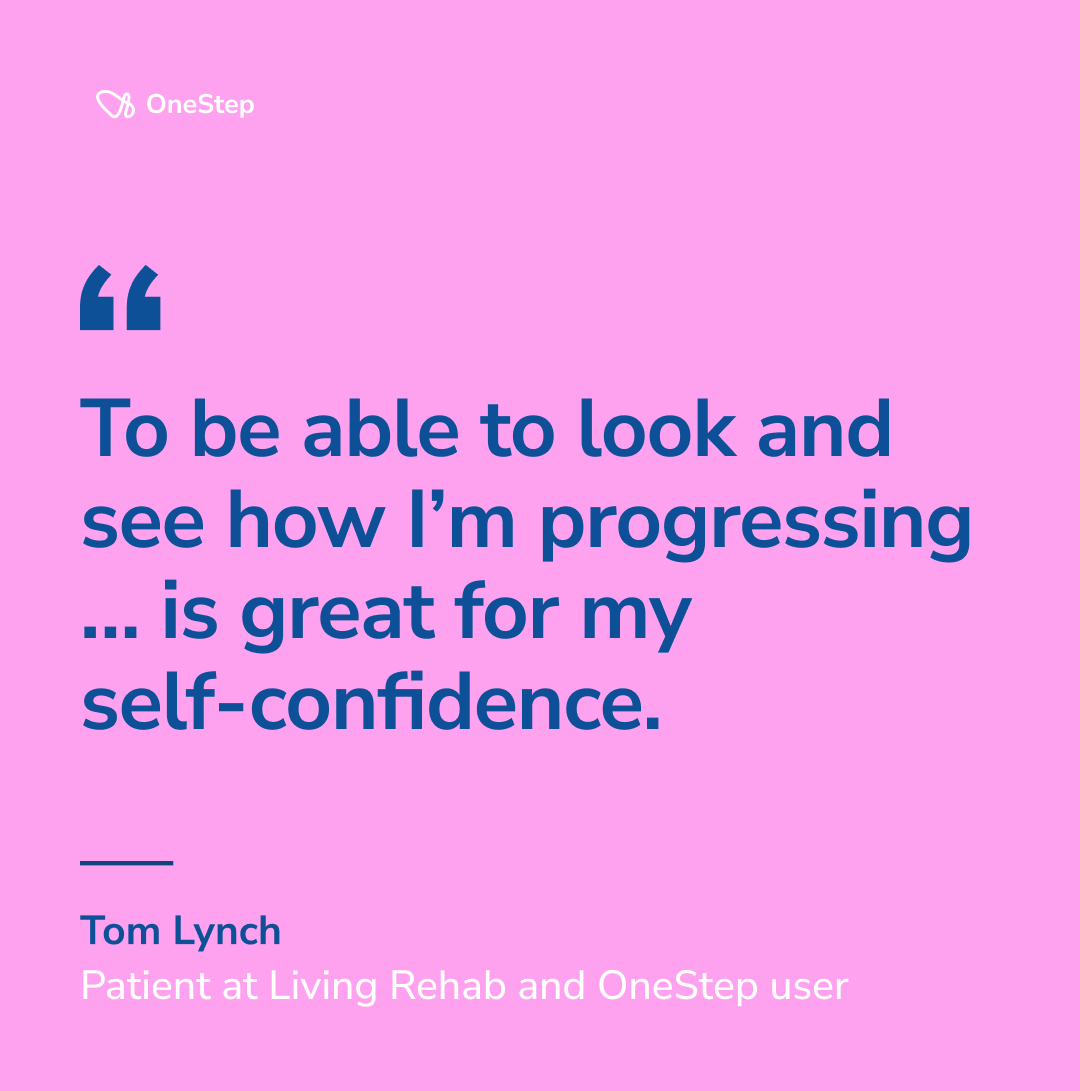
For Tom, a patient at Living Rehab and OneStep user, the value isn't simply that his mobility is being measured. It's that he can see and understand that information himself.
A Walk Score or mobility trend can't capture everything about recovery. But it can give patients another way to understand how they're doing, and something concrete to discuss with their care team.
That brings us back to the data.
Among patients who recorded an initial walk with OneStep, 45% went on to record at least 40 walks.
The data alone can't tell us exactly why each patient returned, and we shouldn't assume that feedback or the Walk Score caused that behavior.
But it tells us something important about engagement: for many patients, the first walk was just the beginning.
A meaningful portion of patients continued participating dozens of times.
For organizations evaluating digital health solutions, that’s an important distinction.
The question isn’t only:
Can we get patients to start?
It’s:
Can we create an experience they continue to participate in after the first interaction?
There's a tendency to think about patient engagement in terms of compliance: How do we get patients to do the thing we need them to do?
Maybe the better question isn't “How do we get patients to engage?”
It's “What are we giving them that's worth engaging with?”
Because the goal isn't to convince patients to generate more data. The goal is to make their data valuable to them, too.