
A story from Rockport Healthcare Services
Download the full story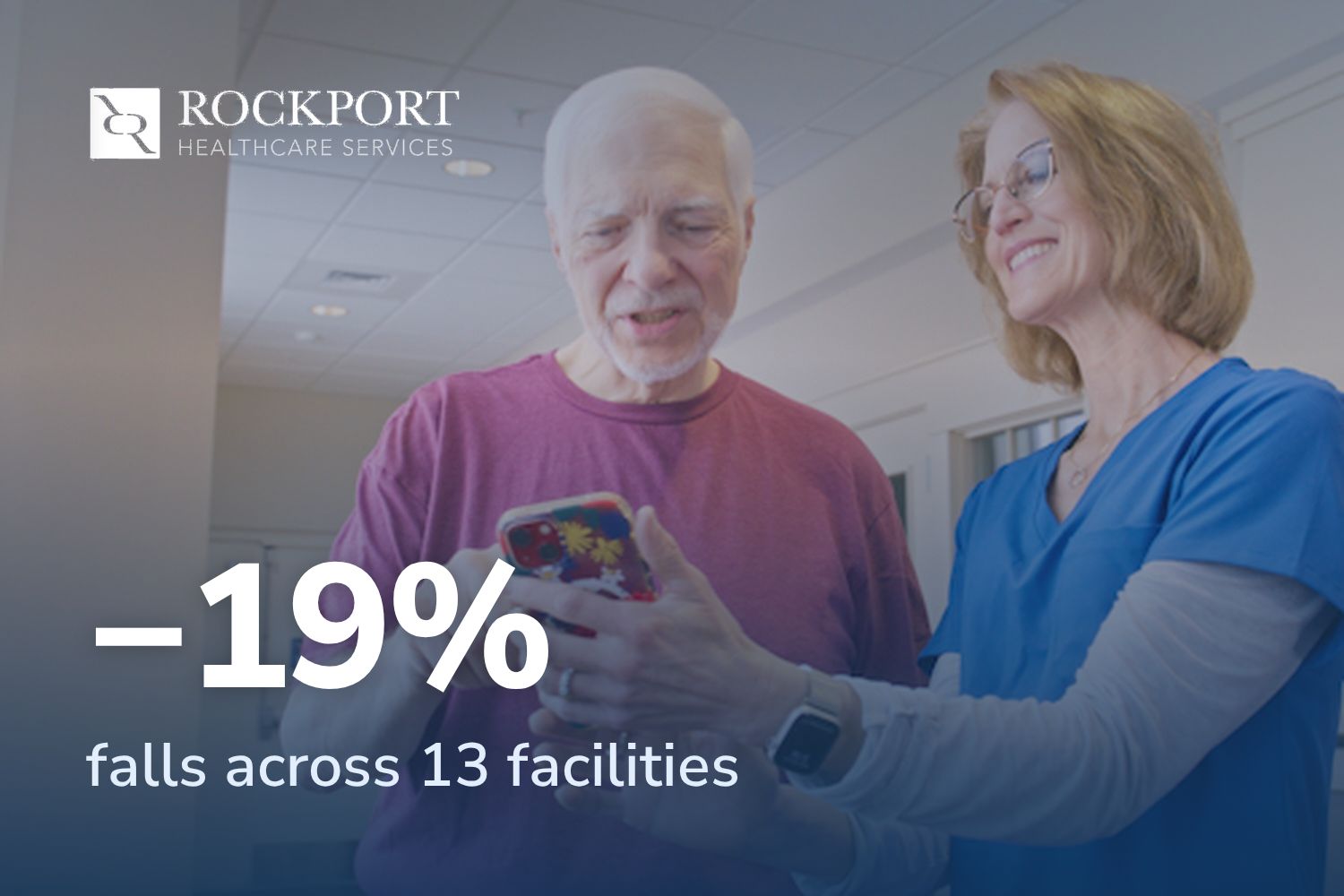
"The first time I used it was on a family member, and I didn't believe the result. OneStep flagged an asymmetry in her walk that I couldn't see — and I've been looking at gait for thirty years. Since then I've lost count of the residents our clinicians were ready to discharge, or hadn't flagged at all, until they saw the walk in OneStep. We don't catch everything with our eyes. Now we don't have to."
Lee Westover, Chief Clinical Officer, Rockport Healthcare Services
Every skilled nursing operator runs a fall-prevention program. Rockport Healthcare Services wanted to know what actually makes falls go down, and it had the scale to find out: 29 facilities with OneStep, five without, and a full year of data.
A fall means injury and lost independence for the resident, and liability for the facility. Rockport assessed fall risk at admission and periodically after that, by hand, when a therapist had time. Between assessments, a resident's balance could drift for weeks with nobody measuring it, and leadership had no objective way to compare one building's results with another's.
A resident walks down the hallway with a phone in a pocket and the care team gets gait speed, asymmetry, double support and a fall-risk level in minutes — no wearables, no lab. OneStep tracks each resident against their own baseline and alerts rehab and nursing when risk rises, so the response happens before the fall. Because every facility measures the same way, leadership can compare fall rates and measurement cadence across the whole organization.
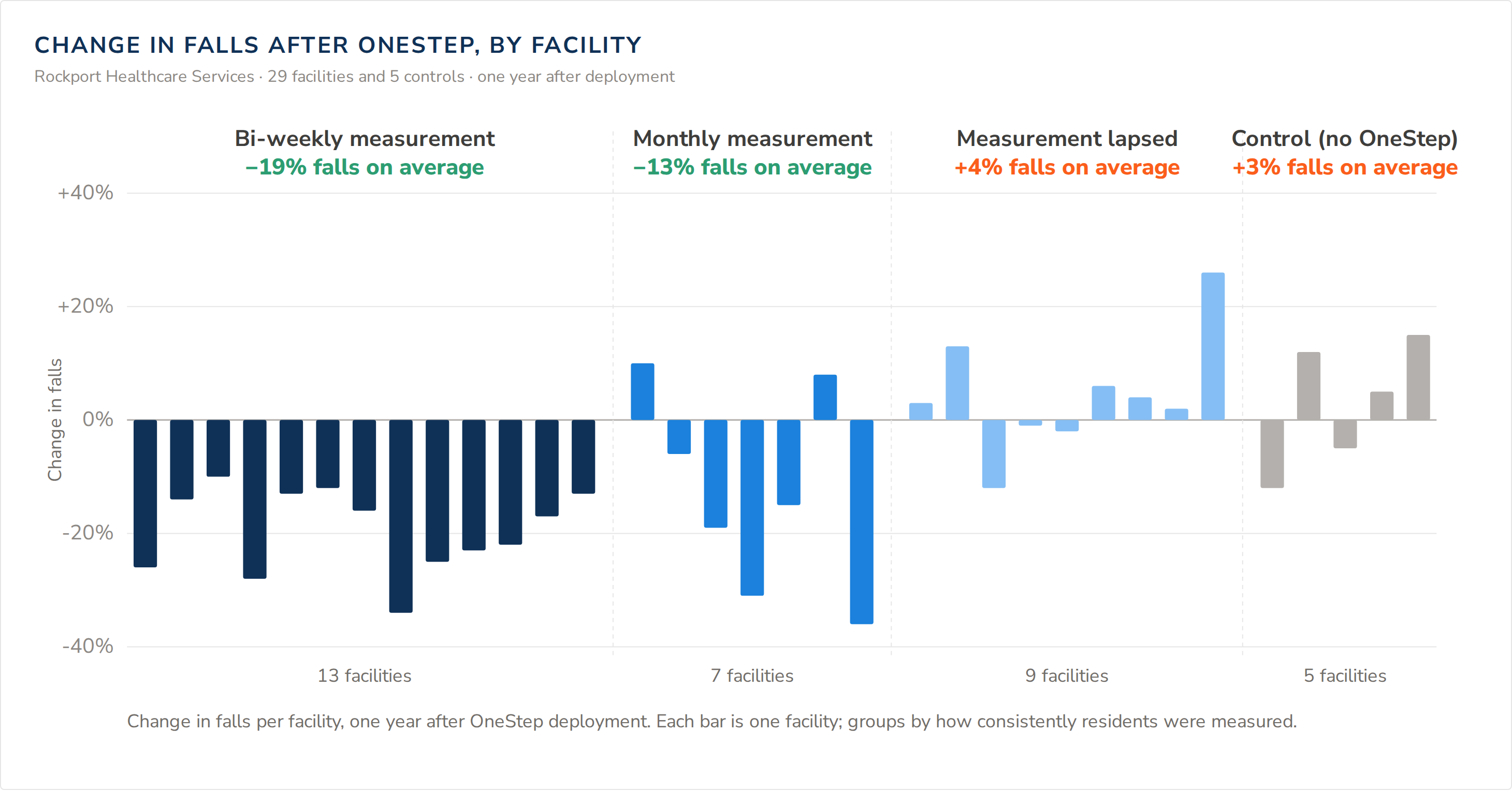
Falls came down most where residents were measured most. Facilities measuring every two weeks cut falls by 19%, facilities measuring monthly by 13%. Where measurement lapsed, falls rose 4% — the same as in the five facilities without OneStep. Across all Rockport facilities, falls fell 8–9% in the first year.
Bi-weekly measurement is now the standard Rockport holds every building to.
“A resident can look steady in the hallway and still be slipping. The walk score shows us the decline before anyone sees it, and it gives my therapists something specific to act on that same day.”
Julia Gonzales, Rehab Clinical Specialist, Rockport Healthcare Services