
A patient story on the gap between in-clinic performance and real-world outcomes.
Download the full story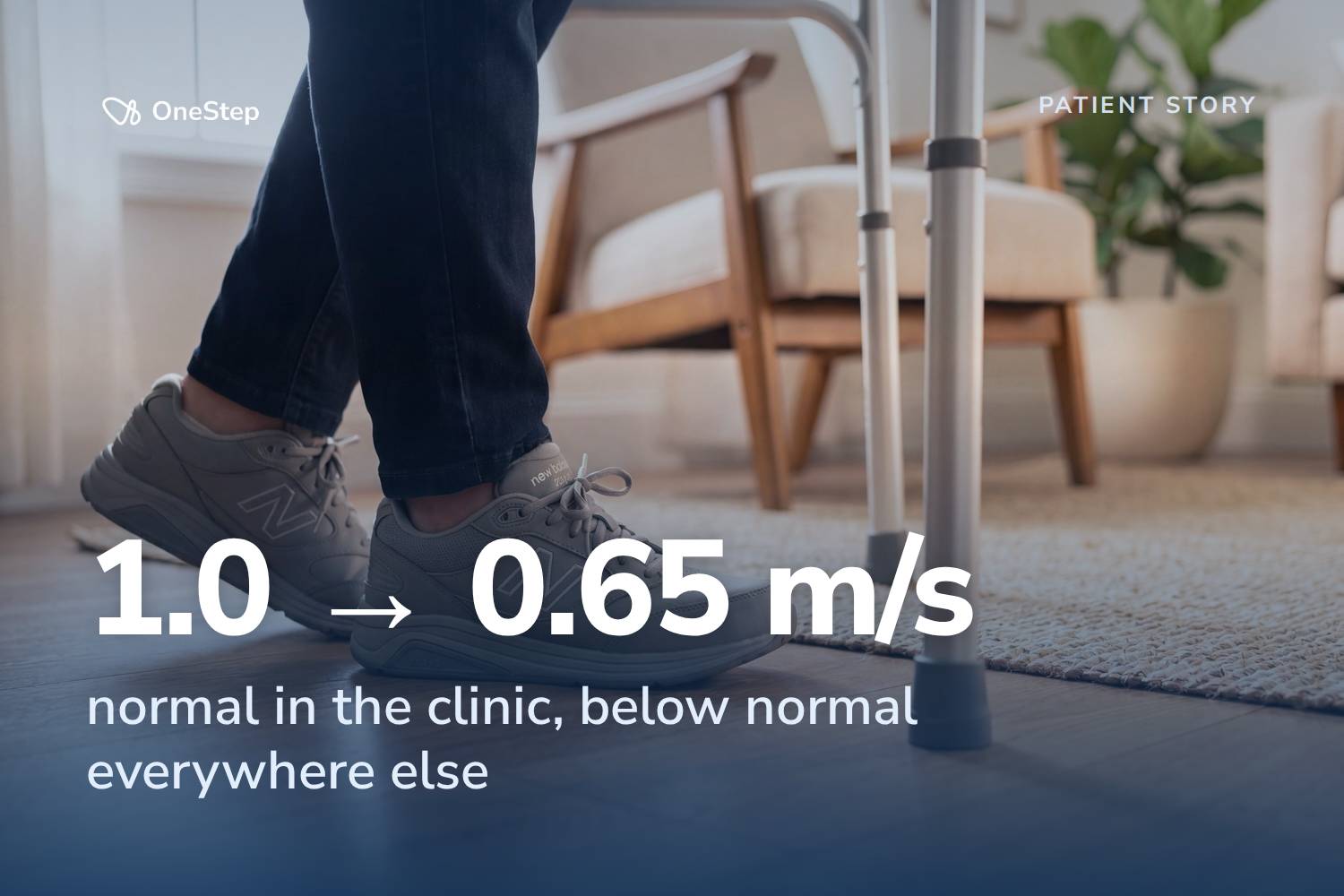
Frank had his knee replaced in late May 2025. He did what he was told — therapy, home exercises, check-ins — and at every visit the numbers were better than the last. Over five months his gait speed climbed into the normal range for his age and sex and his fall risk moved from very high to low. On the standard assessments he was a textbook recovery, and the next step was discharge.
Discharge decisions are made on solid evidence: standardized gait tests, supervised walks, periodic follow-ups. But those assessments measure a patient's best effort, over a short distance, in a controlled environment, with a therapist watching. They can't measure fatigue, compensation patterns, confidence, or what happens on a curb or a carpet — the other 29 days of the month. That is exactly where risk builds after discharge, and it is invisible in the clinic.
Frank's phone was measuring the walks nobody watched. OneStep records everyday walking in the background — to the car, around the block, across the kitchen at night — with no action from the patient, and shows it alongside the walks measured in the clinic. The two lines told different stories. In the clinic Frank walked at about 1.0 metres per second, inside the normal range. On his own he walked at about 0.65 — a third slower, and below the threshold where fall and hospitalization risk rise sharply.
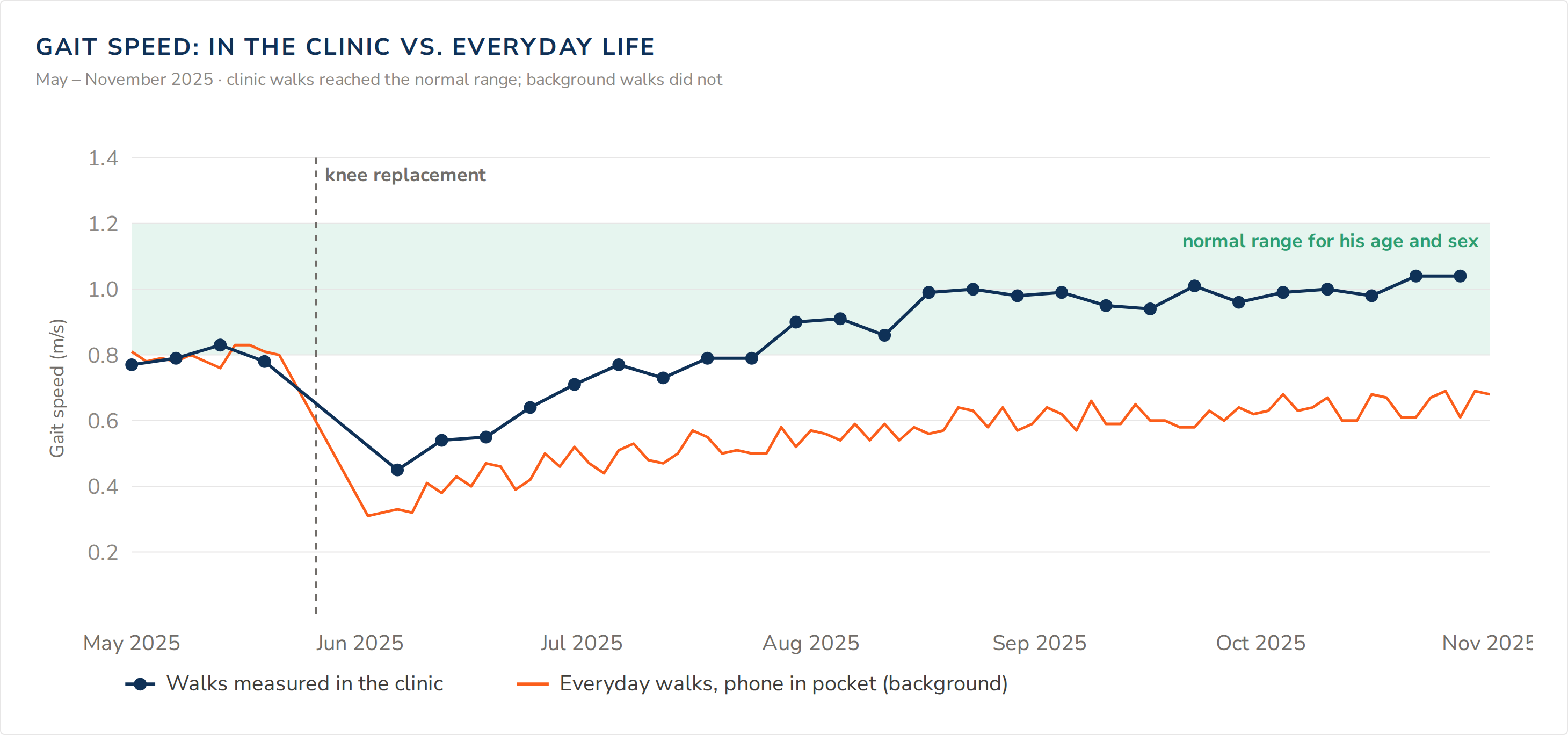
Gait speed, clinic walks vs. everyday walks - May to November 2025. Navy: walks measured in the clinic. Orange: everyday walks measured passively by the phone
Frank could perform in the clinic; his real-world gait had not caught up. His care team read both lines, judged that he was still at risk of a fall at home, and kept him on caseload with a plan aimed at the gap: endurance, confidence and the compensation that disappeared when a therapist was watching. For a provider, the same chart does four things — it makes discharge decisions defensible, it gives payers a reason to approve continued care that a reviewer can read, it catches the decline that leads to post-discharge falls while the patient is still yours to treat, and because the background measurements qualify for Remote Therapeutic Monitoring, it pays for itself without adding work for staff.
Active measurement shows what a patient can do. Passive monitoring shows what they actually do. Discharge should be decided on both.
Frank is a pseudonym. Identifying details have been changed; the measurements are his.